
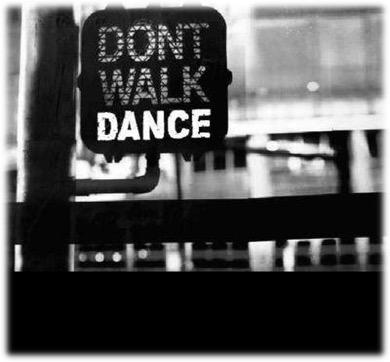
“I would only believe in a God that knows how to dance,”[1] wrote Nietzsche in his work “Thus spoke Zarathustra”,meaning the god Dionysus, the god who awakened human existence to transcend the tragedy of its unpredictable finite nature, through The Birth of Tragedy.
The worship of the god Dionysus was originally expressed by the maenads and satyrs with abysmal dance movements that externalized the passion and drive for self- transcendence, which is consistent with the erotic drive towards life. In the Dionysian dance, culminating in the Birth of Tragedy, the boundaries between the body and the psyche are lost, as at that moment the intersection of the visible and the invisible is registered in the entire physicality of human existence, which is in a state of ekstasis.
After all, was Nietzsche right when he implied that the god Dionysus knows how to dance? The god Dionysus and the personal god of each human existence knows how to dance, a fact that can be seen through the spacey and timely dance of each person that forms the rhythm of his bodily openness, expressing the tendency to overcome his temporal finitude. However, even though the god knows how to dance, he does not teach a specific rhythm, leaving each subject to choose his own rhythm through the effects and modalities of his unfolding within the hic et nunc. Man, however, in order to discover the rhythm of his embodied openness that coordinates human existence with the essence of the world, must fight and dare, take risks and responsibilities, showing courage, this is what Nietzsche means when he writes that “The smooth ice is heaven for those who dance with expertise.” [2]
Already since ancient times, the rhythm of the unfolding of human corporality has been decisive for the harmonious relationship of the human being with his selfhood and with the world. Music and dance contributed the most to the harmonious relationship between the individual and himself, with space and time. Dance is the recording of existential movements with the accompaniment of music, which coordinates the movements of the individual to harmonize with the movements of matter and time.[3] The importance of music and dance for the formation of human existence as a whole is rendered inactive by the education of that era whose foundations were lessons in music, rhythm and harmony.
The Fine Arts are integrated with Knowledge and this inseparable relationship is shaped through the Muses, the patrons of the Arts and Letters, which highlights the necessity of the all-round cultivation of the individual that extends sensually within space and time. Paul Ricœur in his work In Time and Narrative[4] delves into the experience of time through the poetic sphere within which time, which governs reality as a physical quantity, is transformed into human-subjective temporality, from the moment man appropriates the indivisible experience-movement relationship throughout his experiences.
Time emerges, not only as a physical quantity, but, now, as a poetic majesty through the sensuous-kinetic images that extend through structured dance figures within the hic et nunc. Paul Valery[5] approaches time as a physical quantity by defining it as organic time, which permeates all the alternating and fundamental aspects of life. Each of them is affected by a series of muscular actions that reproduces them alone, as if the end or fulfillment of each series constitutes the beginning of the next. In this pattern, the limbs can perform a set of figures that are all interconnected and whose repetition produces a kind of excitement, ranging from languor to delirium, from a kind of hypnotic abandon to a kind of frenzy. In this way the condition of the dance is created. Dance, in addition to time, also reveals space as a space of poetic subjectivity, through its rhythmic movements that emanate from the images of the body as a vinculum of sensation – movement, from the moment the body of the dancer extends as an in-betweenness, between the subtle of the moment and in its duration.
In dance, the natural-experiential chiasm extends rhythmically, as apart from the space that comes to the surface as a physical size, but also as a poetic grandeur, movement also emerges as an integral part of the immediate experience through its delicate relationship with the space and the body itself. The body is no longer guided by a system of axes and directions within the poetic spatio-temporality of the dance, but by a kind of poetic rhythmicity. As Simonides Keios had said: “Dance is silent poetry”. [6]
The silent poetry of the dance becomes evident every time we change the rhythm of the step, going from walking to swinging, at the moment when the rhythmic formation of the movement results from the particular way of emphasis that the individual gives to the modalities of the development of his movements. Also, the dance postures, pauses, as well as the complete immobility incorporate meanings and messages, which externalize the innate tendency that man has to transcend his temporal limitation, making his physical self-determination felt through dance robustness.
The rhythms of the movements capture the ontological movements of the individual, the qualities and characteristics of his actions and emotions. Actions and emotions are folded as imaginary movements, and finally metamorphosed into virtual movements as dance figures. The concept of vital imagination formed the core of Menyhért Palágyi’s philosophical thought. Palágyi approached the temporality of imagination as a fourth dimension.[7] In his theory, nuggets of other defining – for the rune of space-time – theories can be observed, such as the space-time formalism of Henri Pioncaré, of course Albert Einstein’s Theory of Relativity and the great Hermann Minkowski. This 4th dimension of reality is the basis of all these theories, according to which the universe is not Euclidean.[8] The three dimensional universe is a virtual reality of another physical reality. In essence, according to Minkowski, the three-dimensional universe is a representation or, in other words, an isomorphism, of what exists in the real four- dimensional invisible space. This space was named Minkowski space[9] in honor of the great mathematician. This space is created by the human brain, since, as Hermann Minkowski argued, measurable space and time are constructs of the neurophysiology of the human brain.[10]
Space and time constitute independent entities of reality expressed only by their unity, the invisible space-time continuum. So, the world we perceive is the depiction of aesthetic impressions, since in the vast universe there are no forms, shapes, colors. The universe expresses the infinite energy of the infinite, which human physiology selectively forms through its sense organs, giving it form when the infinite energy of the infinite flows through the neurons into specific brain cells.[11]
These theories highlight the human brain as a biological computer,[12] which through the senses collects information in the form of coded energy signals. This information, after being formatted, is re-emitted, transforming the physical energy temporality into an experiential momentum of openness.
Universal reality is governed by matter and energy. Material-energetic reality is created by an imperceptible, but experimentally existing empty space. However, man perceives through the senses, the images of these ripples on a three-dimensional space that is projected as a visualization of the invisible vast space-time.[13]
The human body extends as a biological frequency between human existence and the endless universal material energy, which the individual shapes through the senses, giving it forms and shapes. The energy interposed between space and time is made visible through the movement shaped by the body itself. The human body pulsing in dance sculpts the natural formless magnitude of movement as it gives shape through the musical rhythm to which it harmonizes. The dance figures projected as a moving corporeal image reflect the existential movements of the image-body as a transcendental openness.
The movement from an amorphous unit is transmuted into a work of art form highlighting embodied rhythmic openness as a transcendence of temporal finitude. The body transcends temporal liminality, from the moment it chooses the rhythm of the modalities of familiarization and shaping of space-time through movement. The matter of the physical expansiveness that governs the senses and the surrounding reality is permeated by the energy of the dance movement that expresses the rhythm of familiarization of Being by the individual. If, therefore, matter and energy are the two defining components that make up the universe, then the body, as a biological frequency of meaning transmissionin the midst of experiential movements, constitutes the intermediality of matter – energy, which creates the vital imageof the interaction between them.
The image as a sense-movement vinculum, according to Palágyi, is enhanced through the fundamental and most complete sense of touch. The sense of touch,[14] Palágyi argued, allows a person to distinguish between an object and its image copy. The touch, both of the dancer’s own body and of his partner, provides a primary experience of reality and space. Touch vitally stimulates the awareness of the kinetic imagination, activating the perception of the body’s position as a physical presence in space, but also of its status as an auto-poietic whole.
The body adapts to situations, while at other times it resists, with the consequence that the modalities of its movements and postures also change. For example, the motor expressions of irritation are different from those of a calm state, as the physical movements interact with the ideo-movements of the imagination.[15] The mental movements that accompany the feeling of euphoria affect the movements of the body in a similar way, maintaining its flexibility, and flexibility, reflecting the mental in the physical upliftment. On the contrary, intense worries and the feeling of fear that torment the person by charging him emotionally, neutralize the exciting effect that an idea can exert on the body by ceasing the free association of its objective ideas and motor processes.
Body movements unfold as a continuous and self-renewing relationship between human existence and the world. I am in my body,[16] I am my power, as, according to Maurice – Merleau Ponty, thanks to our body we are able to produce power, understanding, at the same time, this power. The ever-renewing power of bodily self-disposition emerges through the correlation between the enormous potential diversity of possible kinetic combinations and the large number of everyday situations in which human existence finds itself and interacts with space and time. The body of human existence skillfully responds to the changing external conditions, modifying the form of its movements and postures according to the spatial and temporal conditions.
The sensorimotor flexibility of the human physicality develops simultaneously with the flexibility of the Central Nervous System, but this does not mean that the sensorimotor flexibility is developed exclusively as the CNS.[17] The great dancer Merce Cunningham believed that movement comes from something, not something expressive, but from some momentum or energy to which the combination of movements is due.[18] The sensorimotor dynamics of the body maintain this intricately spontaneous rhythmic organization, whose quality of flexibility and openness is decisive for movement-sensation-mind harmonisation, making movement the generative cause of bodily thought.
The movement-sensation relationship becomes an object of reflection for one of the greatest philosophers, Wittgenstein. Wittgenstein observed the correlation between bodily movements and verbal expressions regarding the awareness of the body, emphasizing, in fact, the imprinting of these movements on the gaze.
Wittgenstein delved into the kinesthetic dimension of verbal expressions, making observations on colors and the ways in which they are perceived through the synergy of the human senses.[19] How is the body’s kinesthetic interaction with reality expressed through language games that indicate color differences? How do we compare physical objects, how experiences? Wittgenstein reflects on these questions, bringing to the surface the synchronization of bodily movementswith visual movements, which are expressed in a dance in the midst of colors and shades of material reality. Wittgenstein seeks answers about the world of consciousness, tracing the inextricable connection between Appearance and Being, which becomes visible in the body as it unfolds in space-time in sync with the dynamic rhythm of its own proprioception.
The body co-extends with space-time by physically expressing the rhythm of openness towards the horizon of space and time, revealing, in addition to the potentiality of its material dimension, the lived dimension of its selfhood. Kinesthetic dance vibrations highlight the modalities, often undirected and unbounded movements, that activate the vital relationship between body-movement.
Plato in his work ” The Laws”[20] characterizes the uneducated as indefatigable, emphasizing the relationship between sensation and movement. Plato points out that of all living beings only man has a sense of the order and disorder of movements, which are sculpted within rhythm and harmony. In fact, rhythm and harmony were considered gifts from the gods to humans, specifically from the god Apollo who sculpts the movement-sensation relationship through music, and the god Dionysus, the god of euphoria and pleasure who accompanies the dance as vital rhythm of human corporality.
The god Apollo and the god Dionysus meet and dance the famous sirtaki, sensuously expressing the rhythm of openness of the music of Mikis Theodorakis, as Alexis Zorbas danced with Basil in the movie “Zorba the Greek“.[21] Alexis Zorbas embodies the Dionysus of his time, a man who devours life, who devours freedom, who ekstasies and transforms into a transcendental dance the impulse of vitality that governs every human existence, as diagnosed by the great Henri Bergson.[22] The Dionysian Alexis Zorbas meets the robust and composed Basil who symbolizes the Apollonian power thanks to which the raw Dionysian drive is sculpted. The dance of the Dionysian hero Alexis Zorba with the Apollonian hero Basil sensually shapes the constant movement of human existence as a whole, between movement and stability, the Heracleian flow and Parmenidean solidity, externalizing the dialectical nature of the human being.
What, then, is this vital need that prompts man to pace his movement? Which prompts him to not just drag his steps within his spatio-temporal center, but to dance them? What need drives human existence as Dasein[23] to rhythmically assimilate its Being within the world?
The art of dance, as the leading dancer of the 20th century, Isadora Duncan,[24] once said, is simply an attempt to express the truth of one’s being through gesture and movement, not pantomime movements, but lyrical movement that harmonizes with the flow of the music, which shapes the natural flow of time.[25] The difference between pantomime and dance is due to the musical harmony, more specifically to the rhythm of openness of the human body, which directly externalizes the tragic contradiction of life governed by the merciless brutality of unpredictable transience and, at the same time, by the overwhelming progress of the vital impulse of human existence.
The dance unfolds as a vinculum between musicality and the proprioception of the body. The musical-physical osmosis that governs the dance, lures the dancer, in this case Isadora Duncan, into a form of musical kinetic intoxication. This experience is one of the greatest challenges for a dancer, or even an inner desire, to experience in his body the coordination of musical flow – physical movement in a deep inner way that becomes, finally, visible through dance. In this state of musical kinetic intoxication, a co-familiarization of music – physicality takes place, from the moment the music fully inhabits the dancer’s body and, at the same time, the dancer becomes familiar with the musical rhythm and opens up with his movements towards the horizon of musicality.
Musical tones convey an impulse value, a strong emotional appeal to the body, stimulating the experience of musical climax that elicits a specific response and provides a stimulus for subtle improvisation. Musical improvisation evolves, essentially, through the uplifting encounter of the endless creation of new sound patterns with continuous auditory and proprioceptive feedback.
Improvisation introduces the dancer into the state of ecstasy, from the moment the dancer is carried away and transcends himself, surrendering both to the momentary emotions and to the creative impulses of the body. The body of the dancer fully incorporates the movements of the music. Barry Green,[26] in fact, claims that during a complete improvisational experience the music seems to come from the dancer’s body expressing the embodied openness of his being.
Music-dance improvisations highlight the freedom and flexibility of the sensorimotor dimension of human existence, more specifically, the close relationship between the autonomy of the body and the tendency to perfect movements. We are able through dance to make visible the flexibility, sobriety and grace of bodily openness. Indeed, graceful movements are, perhaps, the most successful products of the bodily drive toward openness of novelty and superabundance.
Grace[27] has little to do with mechanical precision or technical expediency. Rather, it is the result of individual variations and nuances of different improvisational movement choices. Grace stems from the ability to express an idea or an emotion through multiple compositions of movement that tend to transcend temporal finitude. The abundance of different alternative modes of action facilitates the body to bring out its own external and unconscious interactions,creating a multitude of sensorimotor forms.
Acts of improvisation free the dancers from the mechanically calculated movements of trivial reality, renewing bodily memory, which gradually fades within the mechanized bio-system. But the liberation from conventional and pre-planned modalities does not mean that improvisational behavior is completely devoid of order and consistency, since in all kinds of improvisation there is a rhythm and repetition that ensure the preservation of the coherence and unity of the performance. This repeatability, which implies the automatic response of the body, does not mean that it does not involve thought. Instead, the body thinks and organizes the motor parts into a coherent whole thus composing the structure of the movement.[28]
The spontaneous, yet well-paced improvisations are reminiscent of children’s games that are mostly based on childhood spontaneity and improvisation. Children introduce surprising solutions to their play and, at the same time, adhere to some self-imposed rules. Children’s improvisation goes hand in hand with the imitative ability of our body, from a very early age and develops through experiences. Thanks to the imitative capacity of physicality the person acquires skills and habits, learns a wide variety of movements and consciously or unconsciously reproduces various gestures in the most diverse situations. The body when it imitates expresses its ability to enter into its selfhood, while at the same time it assimilates the effects of otherness, without moving away from its selfhood.
Improvisational openness becomes the subject of Paul Ricœur’s reflection, who claimed that spontaneous improvisation depends on the individual’s physical capacity to explore in all directions, not just towards the representation of a specific kinetic structure.[29] The improvisational movements of imitation express the transcendental openness of the body, as they renew the effects of corporeality, as an unconditional openness that expands the limits of its existence.
The dance expresses the rhythm of the embodied effort of the human being to transcend the temporal finitude of its material dimension. Harmonious dance movements take the forms of the unfolding of human existence, at the moment when existence itself, as it dances, gives its Being the rhythm of openness of its body to its spatio-temporal horizon.
The music-movement osmosis reveals the relationship between human existence and space-time, a relationship that fluctuates as an intermediality of identity-otherness. Music awakens the kinesthetic creativity of mental modalities made visible in human physicality, revealing all subtleties and dynamic shadings.
Human corporality as it coordinates its movements with the flow of music reflects the temporal liminality that governs it. The dancing body expresses the rhythm of existential openness through the embodied expression of its truth. The dancer vibrates in harmony with the rhythms of the music, which, from mathematical tones that measure temporality, are transformed into rhythms of expression of existential openness that transcend temporality.
The dancing body not only hears the music that accompanies its dance, but also hears an inner dimensional music with which it is attuned. This inner musicality awakens the human psyche by reminding the being of the openness of the possibilities of its bodily proprioceptiveness, thereby activating it to synchronize with the vibrations of its bodily selfhood. As Isadora Duncan herself said: “listen to the music with your soul. Now, while you are listening, do you not feel an inner self awakening deep within you-that it is by its strength that your head is lifted, that your arms are raised, that you are walking slowly toward the light? This awakening is the first step in dancing, as I understand it”.[30]
Dance is psychosomatic awakening, as it activates the body to realize its uniqueness, to experience its own essence, its own form. The art of dance is the most ideal condition for existence to realize the sensual-kinetic tension of its physical physical dimension towards its bio-kinetic dimension. Aristotle mentions in his work “On the Soul”[31] that art must have at its disposal its own instruments, and the soul its own body. Dance as a vinculum of sensation-movement mobilizes the individual to realize, exactly that: the uniqueness of his body, and rather to become familiar with his body, from the moment he freely chooses his kinesthetic modalities, as he opens up to his spatio-temporal horizon.
The human body does not simply walk, it does not move monotonously through space and time, rather, the human body swirls, stretches, radiates, expands, levitates in its own rhythm daring to exceed the dizzying pace of temporal limitation. The dance movements that are inscribed in the image of the body visualize the shape – body, the moment it enters its essence within the world through dance as familiarization of its Being. The dancer becomes familiar with his own sensuous-motor rhythm the infinite, arrhythmo-rhythm of eternity, from the moment he resists the finitude of physical time through his own time, the time of his dance, which receives the modalities of his own movements and senses.
Dance is the culminating moment of the body’s attunement with its selfhood, as human existence itself moves in a dance, daring to change the rhythm of material time that seems predetermined and limits the human being. The human being is driven to dance sensuous-kinetic expression by his innate need to transcend temporal finitude, seeking the reversibility of irreversible natural laws, as he strives to reverse the flow of time through the dance rhythm of his bodily openness.
During the dance the individual’s self surrenders to an irresistible force, to the sensuous motor force of the body which pushes the human subject to shape the formless, abysmal, inaccessible zero by giving it rhythm, the sensuous motor rhythm of its existential openness. The dance condition as a rhythmic expression of the openness of the body takes shape in the middle of the movements of the individual that constitute the physical records of the classes and experiences of human existence and blend with the movements of the flow of space-time, within which the unfolding of the subject takes place.
Dance is the spatio-temporal condition within which the time of the physical dimension of the body is coordinated with the time of its transcendental dimension as an inspired (Schema) shape-body. Thus, the body unfolds as a work of art, sensually sculpting the universal vibrations of matter.
The great dancer Isadora Duncan harmonizes with the natural rhythms of the universe by exchanging with her dance the natural rhythms in transcendental rhythms of openness of her existence. In her autobiography she confesses that she experienced all the important events of her life near the sea, in fact, the idea for the first dance movements came from the rhythmic movements of the waves, as she imagined the form of Venus emerging.[32]
The imaginary movements of the figure of Aphrodite are extended through dance as ideo-kinetic actions created and guided by sensual-motor images of the imaginary, expressing perceptions and expectations of human existence. The culmination of these movements is the e-motion which causes the spontaneous response of the body. Imaginary movements are incorporated into physical dance events that harmonize with the individual’s musical perception and understanding of the meaning of timbres. Imaginal ideomovements cause sensorimotor reactions that are registered in the body, as it sways in a dance. Certain ideas, in fact, exert such a powerful influence on the individual that some physical reaction is immediately evoked, with the consequence that abstract concepts embodied in fanciful images shape time into feelings.
Isadora Duncan was inspired by every movement, every change, every vibration of nature, from the vibrations of the sea to the movements of the stars in the sky, believing that the movements of the human psyche interact with the movements of the planets. The interplay of ontological-universal movements was a key element of Plato’s philosophy, a fact that can be seen in his dialogue “Timaeus”,[33] where he articulates his beliefs about the coordination of the movements of universal materiality with the movements of the human psyche, which are consistent with the movements of body.
Duncan is sensually inspired by the movement of the sea, while the static image of a mountain prompts her to soar, jump over and overcome every obstacle, to transcend with her dancing stature the limitation that governs countless manifestations of life.
Dance expresses the upward tendency of human physicality, its innate tendency to self-dispose and constantly self-renew, as it embodies its Being within space-time. The body activates the essence of the human being, expressing the actions of its existence.
The human individual emerges as a bio-aesthetic wholeness through action. The human being is completed as an existence throughout his life through the actions and actions within the socio-political becoming. Throughout the individual’s path towards existential fulfillment, the body is of decisive importance, a fact that was seen by both great philosophers of Phenomenology, such as Husserl and Maurice-Merleau Ponty, as well as later philosophers of the 70s, such as Michel Foucault. [34]
The phenomenological and hermeneutical approach to bodily classes and their expressions have been the subject of study by many contemporary philosophers and thinkers, such as Richard Shusterman. Richard Shusterman focuses on the emerging field of somaesthetics.[35] The term somaesthetics was coined by Shusterman himself, who diagnosed the necessity of highlighting the body as a sentient extent of perceptuality, inseparable from the mind. Body aesthetics opposes the concepts that prevail in every manifestation of life even today and present the human body as a flesh of passivity that becomes the weight of stereotypical perceptions and is sacrificed on the altar of profit.
The phenomenological direction of somaesthetics is of decisive importance for every person who claims the fundamental and inalienable right of self-determination within the world, which, however, is compromised in the midst of the modern hybridizations of complexity and evil that stigmatize modern becoming.
Somaesthetics has contributed the most to various art forms in which the body itself becomes a work of art by extending the possibilities of self-disposition. Shusterman focuses on the sociopolitical ramifications and expressions of the human body as an active subjectivity that is self-renewing within spatiotemporal actions and reactions.
The body’s actions and reactions come to the surface through dance somaesthetics. A typical example is the performing arts, and especially the art of dance in areas of Africa,[36] where women defend their rights. The dance becomes the voice of their body, expressing its transcendent potential through thoughts and feelings, as they have been shaped within the proprioceptive representations of flesh and bone. Dance in the developing countries of Africa, despite the socio-political complexities, adversities and conditions of risk, is identified with life, as it accompanies every manifestation of human life, from birth to death,[37] expressing the human-natural relationship. [38]
Life is like a dance: it requires coordination between the sensation and the existential movement of each person, and a necessary condition is the synchronization of the human being itself with the rhythm of the openness of its physicality. Of course, just as in dance the coordination of sensation and movement is difficult and a lot of practice is required in order to achieve the harmonious synchronization of the shape-body with the image-body, so in life it is difficult to coordinate the human existence with itself within the space and time.
But unlike life itself, dance has one key advantage: the ability to correct and redo a wrong move within the transcendental momentum of dance poetics. In life, there is not always the possibility to correct one’s mistakes, as most of the time these mistakes are irreversible and relentless time flows at dizzying rates. The transcendent rhythm of dance enables the repeatability of a movement that is past, in contrast to life within which the event flows and passes irretrievably. As Al Pacino said in the movie “Scent of a Woman”: «No mistakes in the tango, Donna. Not like life. It’s simple . That’s what makes the tango so great. If you make a mistake, get all tangled up, just tango on”. [39]
But what about the most challenging and inviting dance, the dance of life itself? What rhythm should we follow in order not to fall into mistakes? Could it be that the rhythm that everyone must follow is the rhythm of the proprioceptive openness of his body and to transcend the trivial fact that reduces his body to automation? Of course, this upward rhythm of openness is the stake of the modern era, in which man most of the time does not dance to his own rhythm, as a result of which he cannot coordinate with the rhythm of his own life.
The dance of life involves risk, the risk of free self-determination, which human existence must take in order to synchronize with the rhythm of embodied openness, putting into practice the verse – exhortation of the Greek poet, Nikos Kavvadias: “Dance upon the shark’s wing “. [40]
[1] https://www.azquotes.com/quote/214549.
[2] https://www.azquotes.com/quote/652495.
[3] Gabor Csepregi, The Clever Body, Published by the University of Calgary Press, 2006, retrieved (10/11/2023) from https://www.google.gr/books/edition/The_Clever_Body/MYFLtI1W5p8C?hl=el&gbpv=1 , pp. 60-65.
[4] Paul Ricœur, Time and Narrative, Volume 3, translated by: David Pellauer, Kathleen Blamey, published by: University of Chicago Press, 1988, Originally Published : Temps et Récit, , Vol. 3, ©Editions du Seuil, 1985, retrieved (13/11/2023) from https://www.google.gr/books/edition/Time_and_Narrative_Volume_3/n3fRAgAAQBAJ?hl=el&gbpv=1.
[5] See note 3. Above, Gabor Csepregi, p. 109.
[6] https://www.gnomikologikon.gr/catquotes.php?categ=2125.
[7] See above note 5, Gabor Csepregi, p. 129.
[8] Δρ. Μάνος Δανέζης Ανθρώπινος βιουπολογιστής… 4ο Σχολείο Φλεβολογικής Εταιρείας-Ίσθμια 2021
https://www.youtube.com/watch?v=RDqcPfJHNLI. [ Videotaped lecture]
[9] See note 8 above.
[10] See note 9 above.
[11] See note 10 above.
[12] See note 12 above.
[13] See note 13 above.
[14] See above note 5, Gabor Csepregi, p. 129.
[15] See above note 5, Gabor Csepregi, pp. 130-131.
[16] Ponty, M.M. Φαινομενολογία της Αντίληψης, ( Phenomenologie de la perception), (μτφρ. Κική Καψαμπέλη), εκδ. Νήσος, 2016, Αθήνα ( Gallimard, 1945).
[17] Hubert L. Dreyfus, Τι δεν μπορούν να κάνουν ακόμη οι υπολογιστές. Κριτική της Τεχνητής Νοημοσύνης, (What Computers still can’t do: a critique of artificial reason, ©1992 by Hubert L. Dreyfus), (μτφρ. Πόπη Καρλέτσα), Πανεπιστημιακές Εκδόσεις Κρήτης, 1998, κεφ. 7.
[18] See above Gabor Csepregi.
[19] Wittgenstein L., Παρατηρήσεις πάνω στα Χρώματα, (Bemerkungen über die Farben/ Remarks on Colour, Edited by G.E.M Ansombe, ©Basil Blackwell, Oxford 1977), (μτφρ. Παύλου Χριστοδουλίδη), εκδ. Γ. Α Πνευματικός, Αθήνα, 1987.
[20] Plato, Νόμοι ἢ περὶ νομοθεσίας, πολιτικό,ς Ἅπαντα Πλάτωνος, Βιβλίον Β΄[653.a] -654 b, © Δημήτριος Ευαγγ. Μουρμούρας, http://www.physics.ntua.gr/mourmouras/greats/platon/nomoiperinomouesias.html .
[21] Zorba the Greek, (1964) [directed and produced by: Michael Cacoyannis], based on «Βίος και Πολιτεία του Αλέξη Ζορμπά» (1946 novel by Nikos Kazantzakis), 20th Century Fox International Classics
[22] Henri Bergson, Η δημιουργική εξέλιξη, (μτφρ. Κωστής Παπαγιώργης- Γιάννης Πρελορέτζος), εκδ. Πόλις, (1η εκδ. 2005, 2η 2006, ανατύπωση 2021), Αθήνα, ( L’ Evolution Creatrice, 1941, Presses Universitairesde France).
[23] Martin Heidegger, Είναι και Χρόνος ( Sein und Zeit, 1927), (Μεταφρ: Γιάννης Τζαβάρας), εκδ. Δωδώνη, Αθήνα, 1η εκδ. 1978, 2η, 2013.
[24] Isadora Duncan, My Life, (1927), published by: DigiCat, 2022, retrieved (8/11/2023) from https://www.google.gr/books/edition/My_Life/qnd_EAAAQBAJ?hl=el&gbpv=1, Introductory.
[25] Andrea Mantell Seidel (edit.), Isadora Duncan in the 21st Century. Capturing the Art and Spirit of the Dancer’s Legacy, published by: McFarland, Incorporated, Publishers, printed in the USA, © 2016 Andrea Mantell Seidel, retrieved (10/11/2023) from https://www.google.gr/books/edition/Isadora_Duncan_in_the_21st_Century/L3IhCwAAQBAJ?hl=el&gbpv=1, pp. 180-185.
[26] See above, Gabor Csepregi
[27] See above, Gabor Csepregi, p. 61
[28] See above, Gabor Csepregi.
[29] See above, Gabor Csepregi.
[30] See above note 24, p. 187.
[31] Αριστοτέλους, Περί Ψυχής, (μτφρ. Β. Ν. Τατάκη), εκδ. Ε& Μ Ζαχαρόπουλου, Αθήνα 1939.
[32] See above note 23.
[33] Πλάτων, Τίμαιος, (μτφρ. Θ. Βλυζιώτη & Χρίστου Ε. Παπαναστασίου), εκδ.Ε&Μ Ζαχαρόπουλου Ε.Π.Ε, Αθήνα.
[34] Catherine F. Botha (edit.), African Somaesthetics: Cultures, Feminisms, Politics, published by: Brill Leiden/ Boston, 2021, © 2021 by Koninklijke Brill NV, Leiden, The Netherlands, retrieved (12/11/2023) from https://www.google.gr/books/edition/African_Somaesthetics_Cultures_Feminisms/kWULEAAAQBAJ?hl=el&gbpv=1 , Part 1.
[35] https://en.wikipedia.org/wiki/Somaesthetics.
[36] See above note 33.
[37] Kariamu Welsh-Asante, (edit.), African Dance. An Artistic, Historical, and Philosophical Inquiry, Africa World Press, Inc., 1996 ( 1st printing 1994, 2nd, 1998, 3rd 2002, printed in Canada), © Kariamu Welsh Asante 1998, retrieved (14/11/2023) from https://www.google.gr/books/edition/African_Dance/nnsWhJGkXo8C?hl=el&gbpv=1&dq=africa+dance&printsec=frontcover, p. 63.
[38] Σωκράτης Δεληβογιατζής, Το Φυσικό και το Ανθρώπινο, 3η έκδοση, εκδ. Ερωδιός, Θεσσαλονίκη 2002.
[39] “Scent of a woman” (1992) [Director: Martin Brest Producers: Martin Brest, G. Mac Brown, Ronald L. Schwary], TM & © Universal (1992), https://www.youtube.com/watch?v=F2zTd_YwTvo.
[40] Νίκος Καββαδίας «Γυναίκα», music composition: Θάνος Μικρούτσικος, music album: Ο Σταυρός του Νότου, https://www.youtube.com/watch?v=_etfExJeEA4.